Financial support for people with pancreatic cancer in Quebec
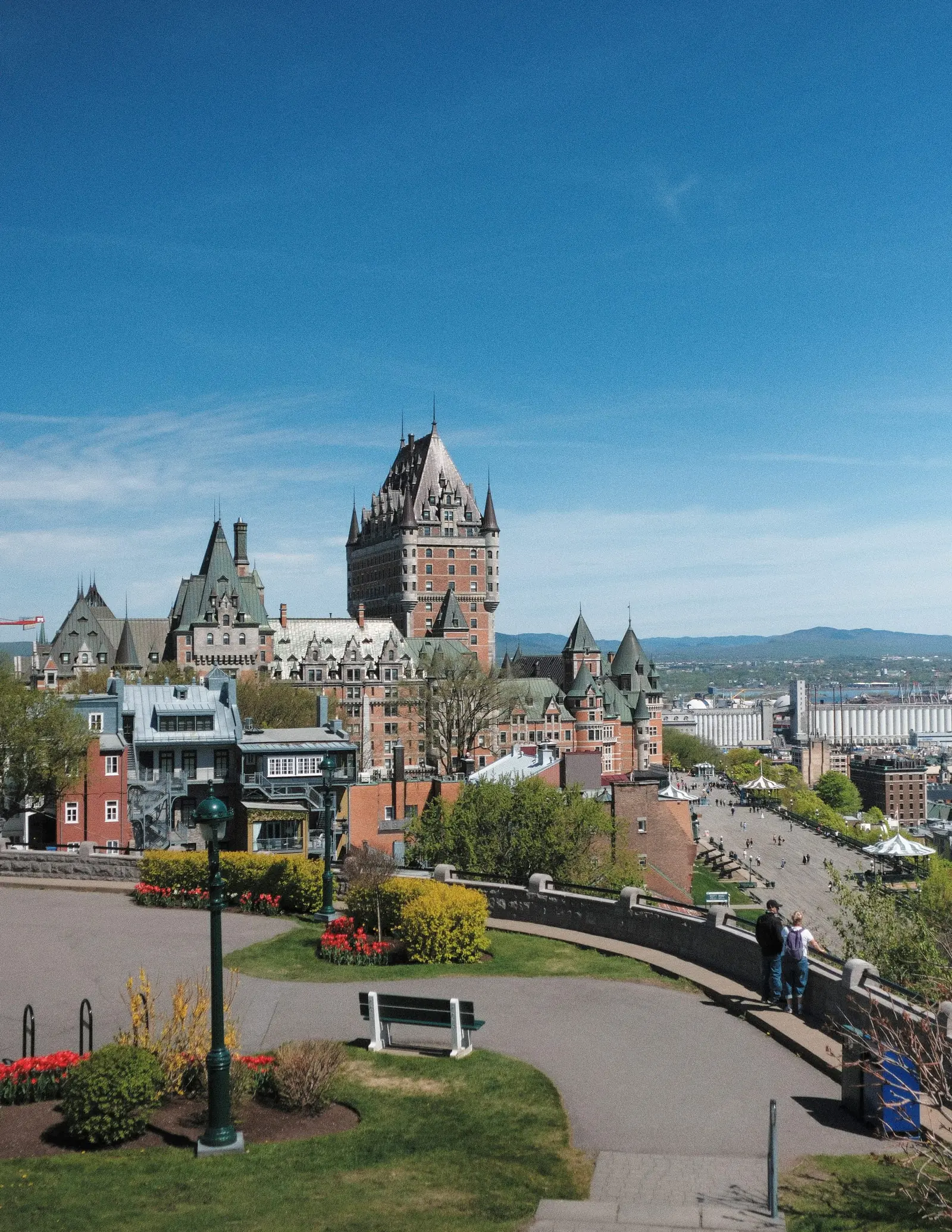
Pancreatic cancer brings three kinds of cost at once: prescriptions you take at home, income that stops when you cannot work, and travel — Quebec is a big province, and treatment can mean long trips to Montréal or Québec City, and sometimes care outside the province.
The fastest starting point is a person, not a program. The Fondation québécoise du cancer's Info-cancer line — 1-800-363-0063, free and confidential, staffed by oncology professionals — is the front door to the foundation's lodging, financial, and legal help described below.
One limit to know up front: The Heather Cutler Foundation publishes in English. Quebec's programs are French-first, so every program in this guide is also given under its French name — the name you will need to search, ask, and apply in French.
Four facts frame everything below, and each breaks an assumption national content — and our own guides for other provinces — may have given you. First: drug insurance is mandatory in Quebec, and a private plan comes before the public one. Second: the Canada Pension Plan disability benefit does not exist in Quebec — Quebec runs its own pension plan, with its own test and amounts. Third: drug-company co-pay cards do not work here — since 2021, manufacturers have been prohibited from paying any part of a covered drug's cost. Fourth: outside Quebec, hospital care is paid in full but doctors' fees are reimbursed only at Quebec rates — the difference is yours. And like every other province, Quebec has no program specifically for pancreatic cancer: what exists is the set of general programs below.
Start here: what do you need help paying for?
| If you need help with… | Start with |
|---|---|
| A take-home prescription you cannot afford | Prescription drug costs |
| Drug coverage at 65 — yours, or a parent's | If you are 65 or over |
| Treatment outside Quebec, or getting to treatment in another city | Travel for treatment |
| Income while treatment keeps you from working | Income when you cannot work |
| Leave and money for the person caring for you | Help for caregivers |
| A quick answer to a specific question | Frequently asked questions |
Prescription drug costs
Start with where the drug is given, because in Quebec that decides who pays — then with which plan covers you: every permanent resident must have prescription drug insurance, and if you are eligible for a private group plan — through your job, your spouse's job, or a parent — you must join it. The public plan, the Régime général d'assurance médicaments (RGAM), administered by the Régie de l'assurance maladie du Québec (RAMQ), covers everyone with no access to a private plan. There is no uninsured state to fall into.
Drugs given in hospital: nothing to pay
Cancer drugs administered during a hospitalization, or at a hospital outpatient clinic, are insured hospital services. Their cost is paid under the hospital insurance plan, not through the drug plan — no deductible, no co-insurance. The same holds for prescription drugs during an extended stay in a public residential and long-term care centre (CHSLD), or a private CHSLD under agreement: in RAMQ's words, you have nothing to pay. The bill in Quebec arrives with the take-home prescription — what the rest of this section is about.
If you have access to a private plan, the private plan comes first
If you are under 65 and eligible for a private group plan, joining it is not optional: you must take the coverage, and cover your spouse and your children through it as well. While you are eligible privately, you are not eligible for the public plan. Two consequences matter during cancer treatment. First, your private plan's own deductible, co-insurance, and maximums govern your take-home drugs — ask your insurer or plan administrator for them, because they are set by your plan, not the province. Second, if your coverage ends, tell RAMQ promptly: the public plan is the coverage that catches you, and registering keeps you insured without a gap. At 65 the choice changes; see If you are 65 or over.
The public plan (RGAM): what you pay at the pharmacy
If the public plan covers you, you pay in two places. The first is an annual premium of $0 to $789 per person, set by your net family income and collected by Revenu Québec through your tax return — not at the pharmacy. The second is your share at the pharmacy counter, each month you buy covered drugs:
- Monthly deductible: $21.25. Each month, you pay the first $21.25 of your covered drug costs yourself.
- Co-insurance: 30%. After the deductible, you pay 30% of the remaining cost; the plan pays 70%.
- Maximum contribution: $105.25 a month, $1,263 a year. Once your deductible and co-insurance payments in a month reach $105.25, the covered drugs you need for the rest of that month cost you nothing more.
Those are the rates in effect from July 1, 2026 to June 30, 2027, for people 18 to 64 and for people 65 and over who do not receive the Guaranteed Income Supplement. RGAM's parameters reset every July 1, all at once — so check the date on any figure you are given, including ours.
Watch for last year's numbers. Pages that have not been updated — insurer and commercial pages among them — still present the rates that ended on June 30, 2026 as if they were current: a premium of up to $766, a $22 deductible, and a maximum contribution of $102.64 a month ($1,232 a year). Older pages show a co-insurance of 32% and a maximum of $99.65. Those figures are out of date. If a page does not date its numbers to a July-to-June cycle, do not rely on it.
Who pays nothing under the public plan
Some people pay no premium, no deductible, and no co-insurance — their covered drugs are free:
- Holders of a valid claim slip (carnet de réclamation) — the card issued to people receiving last-resort financial assistance. Your drug coverage is free at any age; the income section below explains the connection.
- Children of people covered by the public plan: under 18, and young adults 18 to 25 who are full-time students, live with their parents, and have no access to a private plan.
- Certain people with a functional impairment that began before age 18.
- People 65 and over receiving 94% or more of the maximum Guaranteed Income Supplement — the seniors section below has the full picture.
The List of Medications: what "covered" means
The public plan covers the prescription drugs on Quebec's List of Medications — more than 8,000 drugs — when prescribed by a health professional and purchased in Quebec from a pharmacist. The Minister of Health decides which drugs are listed, after consulting the Institut national d'excellence en santé et en services sociaux (INESSS). One pricing rule surprises people: the plan pays for the lowest-price version of a drug, usually the generic; take the brand name when a covered generic exists, and you pay the difference yourself, with narrow exceptions. And "not covered" at the counter has a second question behind it: a drug can be covered without being simply listed.
Exceptional medications: listed, with conditions
A section of the List is reserved for exceptional medications — drugs covered only under set conditions, often for a specific diagnosis or after another treatment has failed. There are two kinds, and the difference is time:
- Coded exceptional medications. Your health professional writes a code on the prescription. You can obtain the drug at the pharmacy without delay — no request, no wait.
- Uncoded exceptional medications. Your health professional must send RAMQ an authorization request first, and the drug is covered once authorization is granted. RAMQ's processing times: 1 working day for a priority exceptional medication — the ones marked with a star in the List — and 25 working days for any other, if the request is complete.
Many cancer drugs travel this road; if yours is uncoded, ask your care team to file as early as the prescription allows.
The exception patient measure: when the drug is not listed at all
A drug that is not on the List of Medications at all can still be covered, for a person with an exceptional need, through the exception patient measure (mesure du patient d'exception). Your health professional sends RAMQ an authorization request setting out your situation; if it is granted, the drug is covered and you obtain it at your pharmacy like any other covered drug. One warning, in RAMQ's own framing: the response time can exceed 25 working days. This is the slowest of the drug routes — start it the moment the drug is chosen, and ask your oncologist's team about it by name.
Why co-pay cards do not work in Quebec
In other provinces, a drug manufacturer's patient support program — a co-pay card, a rebate, free doses — often bridges the cost of an expensive take-home cancer drug. In Quebec, that bridge is largely closed. Since April 15, 2021, manufacturers, wholesalers, and intermediaries have been prohibited from paying, even in part, for a drug covered by the public plan or by a private plan — co-pay cards, reductions, reimbursements, and free doses alike. The exceptions are narrow: help you were already receiving before April 15, 2021 continues while you take the same drug; help is allowed for a drug not covered by any plan; free doses are allowed while an insurer's decision is pending; and help continues for a drug with no covered generic version, with a 30-day transition once one appears. If a program offers you a card, ask your pharmacist whether it survives Quebec's rule for your drug. What replaces the card here is the routing above.
Drugs bought outside Quebec
As a rule, the public plan does not cover prescription drugs purchased outside Quebec. One narrow exception: drugs bought at certain border pharmacies are covered if the pharmacy has an agreement with RAMQ and no Quebec pharmacy serves the public within a 32-kilometre radius of it. Both conditions must hold — a pharmacy just across a border, with Quebec pharmacies nearby, does not qualify. Fill your prescriptions before you travel; hospital care in another province is a different matter, covered in Travel for treatment.
If you are 65 or over
Registration is automatic — and then there is a choice
When you turn 65, you are automatically registered with the public plan — you do not apply. Registration is also automatic for claim-slip holders and their children. With access to a private plan, though, automatic registration is the start of a decision — you must choose one of three arrangements:
- The private plan alone. Allowed only if it offers at least the basic coverage the public plan provides — and you must notify RAMQ, or you will be charged the public premium.
- The public plan alone. Premium through your tax return; pharmacy mechanics as in the RGAM section above.
- The public plan as first payer, supplemented by the private plan. The public plan pays first; the private plan tops up.
Do not let the choice drift: the default is the public plan and its premium, so a private-plan decision has to be communicated.
What you pay depends on the Guaranteed Income Supplement
For people 65 and over, what the public plan costs you at the pharmacy turns on how much of the federal Guaranteed Income Supplement (GIS) you receive:
- Receiving 1% to 93% of the maximum GIS: your maximum contribution is reduced to $58.08 a month, $697 a year. The deductible and co-insurance still apply — they simply stop sooner, at the lower cap.
- Receiving 94% or more of the maximum GIS: your covered drugs are free — no premium, no deductible, no co-insurance.
- Receiving no GIS: the standard maximum applies — $105.25 a month, $1,263 a year.
If your income has fallen — retirement forced early by illness is exactly that — your GIS entitlement may be larger than your last assessment says; check the tiers above against your current income.
Travel for treatment
Begin with the honest position: Quebec has no government treatment-travel program. No provincial benefit pays your way to treatment — no equivalent of the travel grants or hostel policies some other provinces run — in the RAMQ and Québec sources a patient would use. What exists instead: a set of rules about what Quebec's health insurance pays when care happens elsewhere, one charity running the province's cancer lodging network, and the national routes.
What RAMQ pays when care is elsewhere in Canada
Hospital services received in another province are paid in full under the interprovincial agreement, when you present a valid Quebec Health Insurance Card — the ward, the surgery, the hospital-administered drugs.
Physician services are different, everywhere outside Quebec. A doctor in another province may bill you directly, or bill RAMQ — but either way, RAMQ reimburses only up to the rates in effect in Quebec, whatever the other province's fee was. RAMQ's own example: a patient billed $928 in Ontario physician fees was reimbursed $422 — the Quebec rate — and was responsible for the $506 difference herself. RAMQ's advice follows from its own arithmetic: take out private insurance when you leave Quebec, even to travel to another province. Ask before you go how the physicians involved bill.
If the care is not available in Quebec: authorization comes first
One route changes the picture, and it has to be set in motion before you go. If a specialized service you need is not available in Quebec, RAMQ can authorize it in advance. The request is made in writing and must be signed by two physicians specialized in the field related to your illness; it travels with a summary of your case history, a description of the services required, a certificate attesting that those services are not available in Quebec, and the name of the physician whose services are required and the address of the facility. RAMQ evaluates the request and informs you and your specialists of its decision. It is a last-resort route, not a referral formality — raise it with your oncology team as soon as out-of-province care is mentioned, not after the appointment is booked.
What is never covered
Two exclusions are absolute, and both surprise people:
- Transportation is never reimbursed. In RAMQ's words, the fees associated with transport to a hospital — by ambulance, taxi, bus, helicopter, or plane — are not covered by the health insurance plan, even in an emergency. The trip to the care is yours to fund.
- Prescription drugs bought outside Quebec are not covered — the drug section has the rule and its one border-pharmacy exception. A drug administered in an out-of-province hospital is a hospital service; the same drug bought at a pharmacy counter in another province is not insured.
A place to stay: the Fondation québécoise du cancer
The practical in-province answer to treatment travel is the Fondation québécoise du cancer (FQC), which operates accommodation centres in Montréal, Québec City, Sherbrooke, Trois-Rivières, Gatineau, Lévis, and Rouyn-Noranda — the largest lodging network of its kind in Quebec. Its Montréal home, the Norman Fortier Lodge, next to Notre-Dame Hospital, charges $30 a night for the person in treatment and $35 a night for an accompanying carer, including a meal card for the hospital cafeteria, with a free shuttle to the CHUM and other hospital sites. If treatment takes you to a city that is not home, call Info-cancer (1-800-363-0063) and ask about the centre in that city before you price a hotel.
The same foundation runs financial and legal assistance programs for people with cancer in a precarious financial situation, including an oncology financial support program. It does not publish amounts for them, so this guide prints none — they are assessed case by case, and the way in is the same Info-cancer line.
Hope Air: free flights for medical travel
For travel that is long-distance — a flight to a treatment centre, not a drive — Hope Air provides free flights for Canadians who must travel far from home for medical care. Eligibility is based on financial need, assessed when you apply; the program serves Quebec like every other province. Reach Hope Air at 1-877-346-4673, and apply before you book anything yourself: a flight already paid for is not what the program replaces.
The Canadian Cancer Society's Travel Treatment Fund
The Canadian Cancer Society runs a Travel Treatment Fund that helps with the costs of travelling for cancer treatment, available to Quebec patients as part of its national financial help. The amount and the assessment are the society's to describe — start from its financial help page and ask specifically about travel for treatment. Between the FQC's lodging, Hope Air's flights, and this fund, most pieces of a treatment trip have a named source of help — none of it automatic, all of it worth asking for before the trip.
The medical expense tax credit: keep every receipt
Whatever help you do or do not receive, keep the receipts. Under the federal medical expense tax credit, travel expenses are claimable when equivalent medical care is not available where you live: travel of 40 kilometres or more one way to obtain treatment lets you claim transportation costs (public transit, parking, or vehicle expenses), and at 80 kilometres or more one way, meals and lodging become claimable too, with receipts. For 2026, the simplified meal rate is $23 a meal, to a maximum of $69 a day. The credit returns part of the cost at tax time — and only if you kept the paper.
A program that does not cover Quebec
Readers who found this guide through our guides for other provinces may be looking for Port to Care, The Heather Cutler Foundation's travel support program. It serves Atlantic Canada only — Quebec is outside its scope, and it cannot help with travel from a Quebec address. It is named here so the absence is on the record; if you landed on the wrong province's guide, the related guides below will take you to yours.
Income when you cannot work
The Québec Pension Plan disability pension
Quebec workers do not contribute to the Canada Pension Plan — they contribute to the Québec Pension Plan (Régime de rentes du Québec), whose disability pension, paid through Retraite Québec, is the long-term disability benefit that applies here. If you have read about the Canada Pension Plan disability benefit — including in this foundation's guides for other provinces — set those figures aside: that benefit, with its $1,741.20 maximum for 2026, is not available to Quebec contributors, and the test below is not its test.
You may qualify if you are under 65 and Retraite Québec's medical advisors deem your disability severe and permanent. Under 60, "severe" has a precise meaning: your health makes you incapable of doing every type of work for which you would earn $1,882 or more gross per month in 2026 — not just incapable of your own job. You must also have contributed enough: under 60, contributions in 2 of the last 3 years, or 5 of the last 10 years, or for half your contributory period (minimum 2 years); between 60 and 65, 3 of the last 6 years.
The pension has two parts: a flat portion of $610.43 a month, the same for every beneficiary, plus an earnings-related portion based on your contributions — together, a maximum of $1,737.67 a month in 2026. Between 60 and 65, the $610.43 disability amount is paid plus a Québec Pension Plan retirement pension. It becomes payable as of the fourth month after the month your disability is deemed to have begun — a built-in three-month gap the sickness benefits below exist to bridge. A child under 18 adds a disabled contributor's child's pension of $97.74 a month per child (2026). The pension is taxable, indexed every January, and converts automatically to the retirement pension at 65.
Employment Insurance sickness benefits
Employment Insurance is federal, and it applies in Quebec exactly as elsewhere in Canada — it is the first income replacement, because it starts months before the pension above can. EI sickness benefits pay 55% of your average insurable weekly earnings, to a maximum of $729 a week in 2026, for up to 26 weeks. You need 600 insurable hours in the last 52 weeks, a medical certificate, and earnings reduced by more than 40% because of illness or injury; there is a one-week waiting period. Apply as soon as you stop working — the claim is built around the date you file.
Your job while you are ill: the CNESST illness leave
Income benefits replace pay; labour standards protect the job itself. Under Quebec's Act respecting labour standards, administered by the Commission des normes, de l'équité, de la santé et de la sécurité du travail (CNESST), a worker absent because of a non-work-related illness or injury keeps a protected employment relationship for up to 26 weeks in any 12-month period. The leave is unpaid, with one exception: the first two days must be paid, if you have at least 3 months of uninterrupted service and have not already used those days this year. Those two days come from a single shared annual bank — the same two days serve illness, family obligations, caregiving, organ donation, and violence-related absences — and unused days do not carry over. The leave is what holds your position while the pension and EI are assessed.
The Canada Disability Benefit — and Quebec's exemption
The federal Canada Disability Benefit pays up to $204.20 a month for the July 2026 to June 2027 cycle to working-age people with disabilities. It requires a valid Disability Tax Credit certificate, it is income-tested against family income, and from September 1, 2026 it carries a $150 supplement toward the cost of the medical certification the Disability Tax Credit requires. Apply for the Disability Tax Credit early — the certificate is the gate, and it takes time.
Quebec's treatment of this benefit is the best news in this section, and it is settled law, not a policy promise: Quebec exempts the Canada Disability Benefit in full. Under the Règlement sur l'aide aux personnes et aux familles, in force since July 1, 2025, the benefit is excluded income for Quebec's last-resort programs — it does not reduce benefits under the Social Assistance Program (Aide sociale), the Social Solidarity Program, Objectif emploi, or the Basic Income Program (Revenu de base). If you receive any of those, the federal benefit is genuinely additional money.
Last-resort assistance, and the claim slip that makes drugs free
Quebec's last-resort financial assistance — Aide sociale, and the Social Solidarity Program for people with severe employment limitations — is the floor under everything above, administered through Services Québec. This guide does not print its benefit amounts — they depend on household composition. What matters here is the connection back to the drug section: people receiving last-resort assistance hold a claim slip (carnet de réclamation), and claim-slip holders are covered by the public drug plan free of charge — no premium, no deductible, no co-insurance. Make sure the claim slip is active and shown at the pharmacy: it converts the whole RGAM cost structure above to zero.
Help for caregivers
Quebec's caregiver support runs through three different doors — labour standards for time away from work, a provincial tax credit for the care itself, and the federal benefits — separate systems with separate applications.
CNESST caregiver leaves
A worker who is a natural caregiver — a status a health or social-services professional can certify — has leave rights under the Act respecting labour standards, administered by the CNESST:
- 10 days of leave per year for family obligations related to the health of the person being cared for. The two paid days, if unused, come from the same shared annual bank described in the illness-leave section — two days total across all of these absences, not two days each.
- Extended unpaid leave, available regardless of how long you have worked for your employer, over a 12-month period: 16 weeks if the person you care for has a serious illness or a serious accident; 27 weeks if the illness is serious and potentially fatal — a medical certificate is required; and 36 weeks if the person with a serious and potentially fatal illness is a minor child.
These are job-protected absences, not income; the income side is the federal benefit below, and the two clocks run independently.
Revenu Québec's tax credit for caregivers
Quebec pays its caregivers through the tax system. The tax credit for caregivers is a refundable credit — payable even if you owe no tax — claimed on Schedule H of your Quebec return, for care you provided unpaid. The main case for readers of this guide is care of a person 18 or over with a severe and prolonged impairment who needs help with a basic activity of daily living:
- If you do not live with the person you care for: a credit of $0 to $1,494, reduced as income rises.
- If you live with them: $1,494 to $2,988 — a base amount plus the income-tested amount.
A second case covers care of a relative aged 70 or over without such an impairment: $1,494, living together required. Before you count on the money: the care must span at least 365 consecutive days, including 183 days in the year you claim for, and the impairment must be certified on form TP-752.0.14. One addition: specialized respite services you paid for add a further amount of 30% of those expenses, up to a $1,560 credit. The amounts are indexed each year.
Federal caregiving benefits and credits
Two federal supports sit behind the provincial ones:
- EI caregiving benefits. The family caregiver benefit for adults pays up to 15 weeks to care for a critically ill or injured adult. Compassionate care benefits pay up to 26 weeks to care for a person with a significant risk of death within 26 weeks, certified by a medical practitioner. Both pay at the EI rate — 55% of earnings to the 2026 maximum of $729 a week.
- The Canada caregiver amount. The federal Canada caregiver amount for an infirm dependant aged 18 or over is worth up to $8,773 for 2026, reduced as the dependant's net income passes $20,601. It is non-refundable — it reduces tax owed rather than paying out — and is claimed on the federal return, separately from Revenu Québec's refundable credit. A Quebec caregiver can receive both; file for both.
Frequently asked questions
My cancer drug is not on the List of Medications. Is that the end of it?
No — two routes remain. If the drug is in the List's exceptional medications section, your health professional either writes a code on the prescription (covered without delay) or sends RAMQ an authorization request (1 working day for a priority drug, 25 working days otherwise). If the drug is not on the List at all, the exception patient measure can cover it for an exceptional need, on your health professional's request — with the warning that the answer can take more than 25 working days. Both routes are in Prescription drug costs.
A drug company offered me a co-pay card. Can I use it in Quebec?
For a drug covered by the public plan or a private plan, no. Since April 15, 2021, manufacturers, wholesalers, and intermediaries have been prohibited from paying any part of a covered drug's cost — co-pay cards, rebates, and free doses included. The exceptions are narrow: help you already had before that date continues for the same drug; help is allowed for a drug no plan covers; free doses are allowed while an insurer's decision is pending; and a drug with no covered generic keeps its help, with a 30-day transition when one appears. Ask your pharmacist before you count on any program.
I keep seeing different RAMQ numbers online. Which ones are right?
The ones dated for the current cycle: rates in effect July 1, 2026 to June 30, 2027 — a premium of $0 to $789 a year, a $21.25 monthly deductible, 30% co-insurance, and a maximum contribution of $105.25 a month ($1,263 a year). Pages showing different numbers are showing an earlier cycle; the drug section names the stale set. The parameters reset every July 1; treat any undated figure as needing a check against RAMQ's rates page.
My treatment is in another province. What will Quebec pay?
The hospital side, in full: hospital services received elsewhere in Canada are paid under the interprovincial agreement when you present your card. Physicians' fees are reimbursed only up to Quebec rates — the difference is yours; RAMQ's own example is $928 billed and $422 reimbursed. Transportation is never reimbursed, even in an emergency, and prescription drugs bought outside Quebec are not covered. If the care is not available in Quebec at all, ask your specialists about RAMQ's prior authorization — it must be requested in advance, in writing, by two specialists. The full picture is in Travel for treatment.
I am turning 65. Do I have to apply for drug coverage?
No application — registration is automatic at 65. What you may have to do is choose: with access to a private plan, decide between the private plan alone (which requires notifying RAMQ), the public plan alone, or the public plan first, supplemented by the private plan. If you receive the Guaranteed Income Supplement, your costs drop — at 94% or more of the maximum supplement, covered drugs are free.
Does the Canada Disability Benefit reduce my social assistance in Quebec?
No. Quebec exempts the Canada Disability Benefit in full: since July 1, 2025, the province's regulation excludes it from the income counted for last-resort assistance, so it does not reduce Aide sociale, Social Solidarity, Objectif emploi, or Revenu de base benefits. You still need the Disability Tax Credit certificate to receive the benefit itself; once it arrives, Quebec leaves it alone.
Related guides
- Financial support hub — every province's guide in one place.
- Financial support for people with pancreatic cancer in Newfoundland and Labrador — landed on the wrong province? The Newfoundland and Labrador guide covers that province's programs.
- Financial support for people with pancreatic cancer in Ontario — landed on the wrong province? The Ontario guide covers that province's programs.
- Financial support for people with pancreatic cancer in British Columbia — landed on the wrong province? The British Columbia guide covers that province's programs.
- Financial support for people with pancreatic cancer in Nova Scotia — landed on the wrong province? The Nova Scotia guide covers that province's programs.
- Financial support for people with pancreatic cancer in Alberta — landed on the wrong province? The Alberta guide covers that province's programs.
- Financial support for people with pancreatic cancer in New Brunswick — landed on the wrong province? The New Brunswick guide covers that province's programs.
- Financial support for people with pancreatic cancer in Prince Edward Island — landed on the wrong province? The Prince Edward Island guide covers that province's programs.
- Financial support for people with pancreatic cancer in Manitoba — landed on the wrong province? The Manitoba guide covers that province's programs.
- Financial support for people with pancreatic cancer in Saskatchewan — landed on the wrong province? The Saskatchewan guide covers that province's programs.
- Financial support for people with pancreatic cancer in Yukon — landed on the wrong province? The Yukon guide covers that province's programs.
- Financial support for people with pancreatic cancer in the Northwest Territories — landed on the wrong province? The Northwest Territories guide covers that province's programs.
- Financial support for people with pancreatic cancer in Nunavut — landed on the wrong territory? The Nunavut guide covers that territory's programs.
- Province guides — provincial programs and services across Canada.
Sources and review information
Program facts in this guide were checked against the following sources on November 3, 2026:
See how Quebec compares with the rest of Canada in the provincial report card — Where You Live Matters, The Heather Cutler Foundation's assessment of provincial pancreatic cancer care.
Sources
- Régie de l'assurance maladie du Québec (RAMQ) — Prescription drug insurance
- RAMQ — Rates in effect
- RAMQ — Know the conditions for coverage
- RAMQ — Register for or deregister from the public plan
- RAMQ — Age 50 or over?
- RAMQ — Know which services are covered outside Québec
- RAMQ — Services received outside Québec: myths and realities
- Government of Québec — Regulation respecting the application of the Health Insurance Act (chapter A-29, r. 5), section 23.1 (prior authorization for services not available in Québec)
- Retraite Québec — The disability pension under the Québec Pension Plan
- Revenu Québec — Tax credit for caregivers
- Commission des normes, de l'équité, de la santé et de la sécurité du travail (CNESST) — Non-work-related accident or illness
- CNESST — Natural caregivers
- Government of Québec — Règlement sur l'aide aux personnes et aux familles (chapter A-13.1.1, r. 1), sections 111, 138, 177.29 and 177.79, as amended by decree 255-2025, Gazette officielle du Québec, March 12, 2025 (Canada Disability Benefit exemption, in force July 1, 2025)
- Fondation québécoise du cancer — Accommodations
- Fondation québécoise du cancer — Services
- Government of Canada — EI sickness benefits
- Government of Canada — Canada Disability Benefit and How much you could receive
- Government of Canada — EI caregiving benefits and leave
- Canada Revenue Agency — Eligible medical expenses
- Canada Revenue Agency — Indexation adjustment for personal income tax and benefit amounts
- Canadian Cancer Society — Financial help
- Hope Air — hopeair.ca
Programs change. If a figure here no longer matches what a program tells you, the program is right — and please tell us through our error reporting page so we can fix this guide.
Published by The Heather Cutler Foundation. Last reviewed: November 3, 2026. Status: pending medical review.