



The November 2025 edition of Heather's Hope highlights key advancements in pancreatic cancer research, including a novel immune-targeting antibody therapy, nanoparticle treatments, and promising blood/stool-based early detection methods. These breakthroughs reflect ongoing progress in both immunotherapy and targeted treatments that offer new hope to patients and their families.
THE MONTH IN NUMBERS
- 67,440 estimated new pancreatic cancer diagnoses in the U.S. in 2025
- 51,980 estimated deaths from pancreatic cancer in 2025
- 13% five-year survival rate for pancreatic cancer currently
- 2030 projected year pancreatic cancer becomes the 2nd leading cause of cancer death in the U.S.
BREAKTHROUGH DISCOVERIES
1. Novel Antibody Therapy "Wakes Up" the Immune System
The Discovery: Northwestern Medicine scientists have uncovered how pancreatic tumors evade the immune system and developed a groundbreaking antibody therapy to counter this evasion strategy.
What's Happening: Pancreatic tumors exploit a natural safety mechanism by coating themselves with a sugar called sialic acid on a surface protein called integrin α3β1. This sugar disguise sends a false "don't attack" signal to immune cells through a sensor called Siglec-10. The team developed monoclonal antibodies that block this sugar-mediated signal, essentially unmasking the tumor's disguise.
Preclinical Results: In mouse models, the antibody therapy successfully reawakened immune cells to attack cancer cells. Tumors in treated mice grew significantly slower than in untreated controls—a major breakthrough after six years of research.
Next Steps: The team is now refining the antibody for human use and plans to:
- Conduct early safety and dosing studies
- Test combinations with current chemotherapy and immunotherapy
- Develop a companion diagnostic test to identify which patients' tumors rely on this sugar-based pathway
Timeline: Dr. Mohamed Abdel-Mohsen estimates this therapy could reach patients in approximately five years if progress continues as planned.
Our Perspective: This represents a paradigm shift in understanding pancreatic cancer's immune resistance—one of the field's most persistent challenges.
2. PI3K-C2Y Protein Identified as Tumor Suppressor
The Research: Scientists at Worldwide Cancer Research in Italy have identified PI3K-C2Y, a protein that may function as a tumor suppressor in pancreatic ductal adenocarcinoma (PDAC).
Key Finding: Counterintuitively, tumors actually grow faster without the PI3K-C2Y protein, suggesting it acts as a critical "stop signal" to cancer cell growth. This discovery opens entirely new therapeutic avenues.
Significance: Understanding how this protein suppresses tumor development could pave the way for new pancreatic cancer therapies targeting this mechanism.
Future Direction: This work suggests potential for therapies that enhance or mimic the tumor-suppressing function of PI3K-C2Y.
3. Novel Nanoparticle Therapy Shows Dramatic Results
The Technology: Researchers at Sylvester Comprehensive Cancer Center, the University of Miami College of Engineering, Moffitt Cancer Center, and Cellular Nanomed, Inc. have developed magnetoelectric nanoparticles (MENPs) that can locate and destroy pancreatic tumors.
How It Works:
- MENPs are injected intravenously and guided to the tumor site using a small magnet
- Inside an MRI scanner, a magnetic field activates the particles
- The activated particles generate tiny electric fields that disrupt cancer cell membranes
- This triggers natural cell death (apoptosis) while leaving healthy tissue unharmed
Preclinical Results:
- Tumors shrank to one-third their original size
- Complete tumor disappearance in one-third of treated models
- Survival time more than doubled
- No damage to healthy organs
Advantages:
- No drugs, heat, or invasive procedures required
- Minimizes side effects
- Could overcome limitations of existing electric-field therapies
Significance: Dr. John Michael Bryant notes this approach "brings a new dimension to theranostic oncology by coupling imaging and controlled physical mechanisms of tumor treatment in real time."
Clinical Path: While currently at the preclinical stage, successful translation to humans could revolutionize pancreatic cancer treatment.
4. Early Detection Tool: PACMANN Blood Test Updates
The Tool: The PAC-MANN test (Protease Activity-Based Assay using a Magnetic Nanosensor) continues to demonstrate promise for early pancreatic cancer detection.
Performance Metrics:
- 98% accuracy at distinguishing pancreatic cancer patients from healthy individuals and those with non-cancerous pancreatic issues
- 85% accuracy for early-stage cancer detection when combined with the established CA 19-9 test
- Quick fluorescent readout requiring only a tiny blood sample
Monitoring Capability: The test can also track treatment effectiveness—researchers observed decreased protease activity after surgery, suggesting it can monitor therapeutic response in real-time.
Significance: Early detection could increase survival rates to over 80%, making this test a potential game-changer in pancreatic cancer care.
5. Stool Microbiome Testing for Early Detection
The Innovation: Worldwide Cancer Research scientists have discovered that analyzing microorganisms (bacteria) in stool samples could provide a fast, non-invasive method to detect and diagnose pancreatic cancer early.
Why This Matters: Given the difficulty of early pancreatic cancer detection, a simple stool-based test could be transformative for prevention and early intervention strategies.
Potential Impact: This screening approach could be a game-changer in preventing deaths from this lethal cancer type.

CLINICAL TRIAL ADVANCES
Pelareorep Phase 3 Trial Gets FDA Green Light
The Breakthrough: Oncolytics Biotech announced FDA alignment on the Phase 3 trial design for pelareorep, an oncolytic virus designed to prime the immune system against pancreatic tumors.
Trial Design:
- First-line treatment for metastatic pancreatic ductal adenocarcinoma (mPDAC)
- Three-arm comparison:
- Gemcitabine + nab-paclitaxel (standard chemotherapy)
- Gemcitabine + nab-paclitaxel + pelareorep
- Gemcitabine + nab-paclitaxel + pelareorep + checkpoint inhibitor
- Primary endpoint: Overall Survival (OS)
- Interim efficacy analysis planned for early benefit assessment
Historical Context: Post-hoc analysis showed pelareorep + chemotherapy achieved approximately 22% two-year survival rate versus 9% with chemotherapy alone (historical benchmark).
Significance: This could become the first approved immunotherapy for first-line pancreatic cancer—a transformative milestone.
Next Steps: Oncolytics is completing administrative preparations including protocol finalization, supporting documentation, and site selection. The company is also actively pursuing strategic partnerships.
CAR-NKT Cell Therapy Shows Remarkable Efficacy
The Innovation: UCLA researchers have developed a CAR-NKT cell therapy (Chimeric Antigen Receptor Natural Killer T cell therapy) that demonstrates superiority over current immunotherapies in pancreatic cancer models.
Key Advantages:
- Mass-producible and storage-ready: Unlike personalized CAR-T therapies requiring weeks to manufacture, this can be produced in bulk and stored for immediate use
- Cost-effective: Available at a fraction of the cost of current cell therapies
- Highly effective tumor-homing: Cells express high levels of chemokine receptors that function as "molecular GPS systems," actively seeking tumors regardless of location
Preclinical Performance:
- Tested across multiple pancreatic cancer models (in-pancreas tumors, metastatic tumors, subcutaneous tumors)
- Consistently slowed tumor growth and extended survival
- Maintained cancer-killing potency in harsh tumor environments
- Showed minimal signs of exhaustion (a common problem with other cell therapies)
Clinical Path: With all preclinical studies now complete, the team is preparing FDA applications to begin clinical trials.
Our Perspective: This "one-product-fits-all" approach could democratize advanced immunotherapy access for pancreatic cancer patients.
Daraxonrasib (RAS Inhibitor) Advances in Development
The Progress: The FDA granted orphan drug designation to daraxonrasib (RMC-6236), a multiselective RAS(ON) inhibitor targeting KRAS mutations—present in approximately 95% of pancreatic cancers.
Clinical Data from Phase 1/1b:
- In KRAS G12X-mutant populations: 36% objective response rate
- Across broader RAS-mutant populations: 27% objective response rate
- Median progression-free survival: 8.8 months (KRAS G12X-mutants)
- Disease control rates: 91-95%
- Median overall survival: 13.1-15.6 months
RASolute Phase 3 Trial: A global three-arm Phase 3 trial is scheduled to begin in Q4 2025 (RASolute 303), testing:
- Daraxonrasib monotherapy
- Daraxonrasib vs. standard second-line chemotherapy
- Enrollment in previously treated metastatic PDAC patients
Significance: The RAS-targeting revolution represents one of the biggest therapeutic advances in pancreatic cancer history, with daraxonrasib positioned as a potential second-line standard of care.
Timeline: Expected completion by December 2027.
Atebimetinib Shows Promise in First-Line Treatment
The Data: Early nine-month follow-up data from a clinical trial demonstrates that atebimetinib (IMM-1-104), combined with modified gemcitabine/nab-paclitaxel, significantly improves pancreatic cancer survival rates.
Clinical Benefits:
- Improved overall survival
- Enhanced progression-free survival
- Improved tolerability compared to chemotherapy alone
- Durable response noted in patient populations
Physician Perspective: Dr. Barbara Ma reports: "I have seen firsthand in my own patients the benefits of atebimetinib's durability and tolerability. The remarkable overall survival, progression-free survival, and tolerability data represent an important step towards creating urgently needed new options for these patients."
Next Steps: A confirmatory study is being planned to validate these promising early results.
RESEARCH MOMENTUM
Three Key Research Directions Highlighted
During Pancreatic Cancer Awareness Month, Dana-Farber Cancer Institute highlighted three critical research advances:
1. Earlier Detection Innovation
- AI and biomarker tools being developed for improved screening
- PAC-MANN and microbiome testing represent paradigm shifts in detection methodology
2. RAS Therapeutics Revolution
- Multiple RAS-targeting therapies in clinical trials
- Daraxonrasib Phase 3 study underway
- Approximately 90% of patients in Phase 1 daraxonrasib trials showed some benefit
- Could provide foundation for more effective combination therapies
3. Novel Immunotherapy Development
- Sugar-based immune evasion mechanism discovered and targeted
- CAR-NKT cell therapy showing remarkable results
- Multiple vaccine approaches in trials (mRNA-based, neoantigen-targeted, KRAS-directed)
AWARENESS MONTH IMPACT
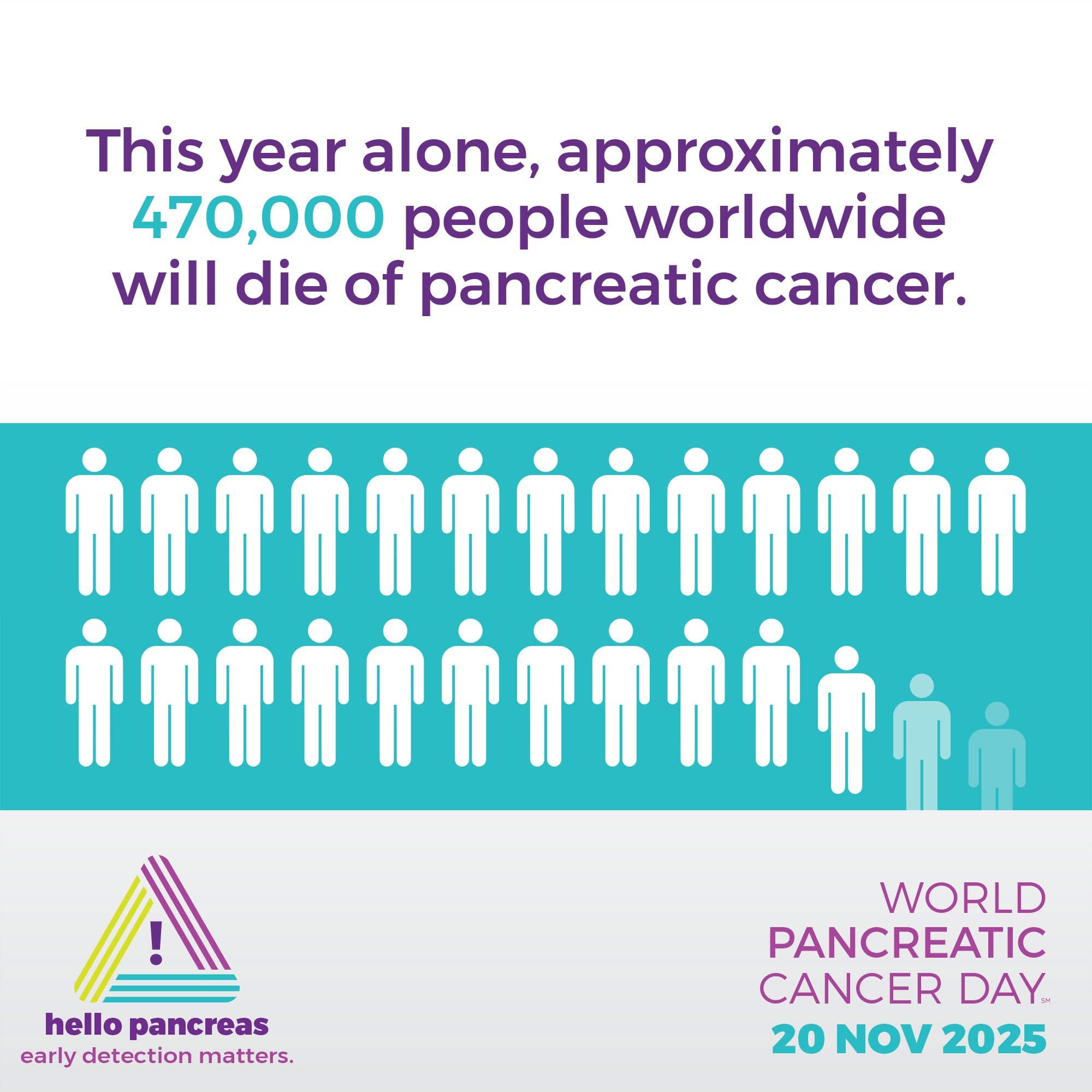
November 2025: Pancreatic Cancer Awareness Month Recap
What Happened:
- Landmarks worldwide lit up in purple (pancreatic cancer awareness color)
- Survivor and caregiver stories elevated public awareness
- Genetic counseling initiatives promoted for at-risk individuals
- Advocacy efforts focused on increased research funding
Key Messages Shared:
- Early detection could increase survival rates to over 80% (compared to current 13% five-year survival)
- Approximately 67,440 new diagnoses expected in 2025
- Prevention through healthy habits: tobacco avoidance, weight management, diabetes control
WHAT THIS MEANS FOR PATIENTS & FAMILIES
Reasons for Hope
-
Immune evasion mechanism now understood: The sugar-coat trick can be targeted—offering potential new therapeutic approaches
-
Multiple pathways being addressed:
- RAS mutation targeting (present in 95% of pancreatic cancers)
- Immune system reactivation
- Early detection breakthroughs
- Novel cell therapy platforms
-
Clinical trials expanding:
- First-line immunotherapy options emerging
- Precision medicine approaches advancing
- Less toxic alternatives to traditional chemotherapy being developed
-
Detection improving: New blood tests and biomarker approaches could catch cancers earlier when treatment is more effective
For Patients & Families
Consider these action items:
- Discuss genetic counseling if you have a family history of pancreatic cancer
- Talk to your healthcare provider about early detection options if at risk
- Ask about participation in clinical trials—multiple options now available
- Stay informed about emerging therapies through trusted sources like PanCAN, AACR, and your oncology team
LOOKING AHEAD TO DECEMBER
- Ongoing Phase 3 trial preparations and patient enrollment
- FDA meetings and regulatory approvals expected
- Holiday fundraising campaigns supporting pancreatic cancer research
- Year-end research summaries and 2026 outlook publications
RESOURCE CORNER
For More Information:
- Pancreatic Cancer Action Network (PanCAN): www.pancan.org
- American Association for Cancer Research (AACR): www.aacr.org
- National Cancer Institute (NCI): www.cancer.gov
- Clinical Trials: www.clinicaltrials.gov
Pancreatic Cancer Facts:
- It is the third leading cause of cancer death in the U.S.
- Projected to become the second leading cause by 2030
- Five-year survival rate: 13% (compared to 90%+ for some other cancers)
- Early detection could increase survival to over 80%
FINAL THOUGHTS
November 2025 has been a month of genuine scientific breakthrough and renewed hope. From discovering how tumors hide from the immune system to engineering next-generation cell therapies, the pancreatic cancer research community is accelerating progress across multiple fronts. While challenges remain, the convergence of early detection innovations, precision medicine approaches, and novel immunotherapies suggests we are entering a transformative era in pancreatic cancer care.
The message is clear: Early detection saves lives, awareness fosters hope, and collective engagement paves the way for breakthroughs.
Heather's Hope is committed to bringing you the most significant advances in pancreatic cancer research and treatment each month. We hope this newsletter provides both information and encouragement as we continue the mission of improving outcomes for pancreatic cancer patients worldwide.
Have a story to share? Know of an advance we missed? Contact us to be featured in next month's newsletter.
FAQ
What are the most exciting recent developments in pancreatic cancer research?
This month brought several promising breakthroughs. Scientists are working on a new antibody therapy that wakes up the immune system, discovered a protein called PI3K-C2Y that helps slow tumor growth, developed innovative nanoparticle therapies, and made progress with early detection tools like the PAC-MANN blood test and stool microbiome testing.
How does the new antibody therapy actually work?
Pancreatic tumors can hide from the immune system using a sugar coating called sialic acid. The new antibody therapy blocks this “disguise,” allowing the body’s immune cells to recognize and attack the tumor. In early studies with mice, this approach slowed tumor growth significantly.
What is the PAC-MANN blood test and why is it so important?
PAC-MANN is a simple blood test that can help detect pancreatic cancer earlier than ever before. It has shown high accuracy in distinguishing between people with pancreatic cancer and healthy individuals. Early detection like this could dramatically improve survival rates.
Are there any new clinical trials for pancreatic cancer?
Yes! There are several exciting trials underway, including studies for pelareorep (an oncolytic virus therapy), CAR-NKT cell therapy, RAS-targeting drugs like daraxonrasib, and first-line treatment studies for atebimetinib. These trials aim to bring more personalized, effective, and less toxic treatment options to patients.
What makes CAR-NKT cell therapy different from other immunotherapies?
Unlike some therapies that have to be made for each individual patient, CAR-NKT cells can be produced in larger batches and stored for immediate use. They naturally seek out tumors, work in tough tumor environments, and are more affordable—potentially making advanced immunotherapy accessible to more people.
How can early detection change outcomes for pancreatic cancer?
Catching pancreatic cancer early makes a huge difference. With tools like PAC-MANN and stool microbiome tests, doctors could identify cancer sooner, when treatment is more effective. This could boost survival rates from just 13% to over 80% in the future.


