



I went to Canada’s Drug Agency Symposium 2026 wearing two hats. One was the executive director of a charity built on policy advocacy, biomarker access, and patient support. The other was something simpler — a son who watched his mother be told that the genomic testing existed, the targeted therapy existed, and the evidence existed, but that the system connecting those three things to her did not.
My mom, Heather Cutler, was a registered nurse. She was diagnosed with pancreatic cancer in late 2022. Her tumour was sequenced at Johns Hopkins. The results came back showing a high tumour mutational burden and a KRAS G12D mutation — exactly the kind of profile that, in a different version of our healthcare system, would have unlocked treatment options. Keytruda was discussed when she was already at death’s door. She passed away before the science caught up to her.
I was sitting at home by my computer for three days stuck to watching those panels at CDA Symposium because the gap that took her is the gap thousands of Canadian families are sitting in right now. And the people on stage are some of the few who can actually close it.
Here’s what I heard, and why it matters.
“The Science Exists, but Patients Can’t Actually Benefit From It”
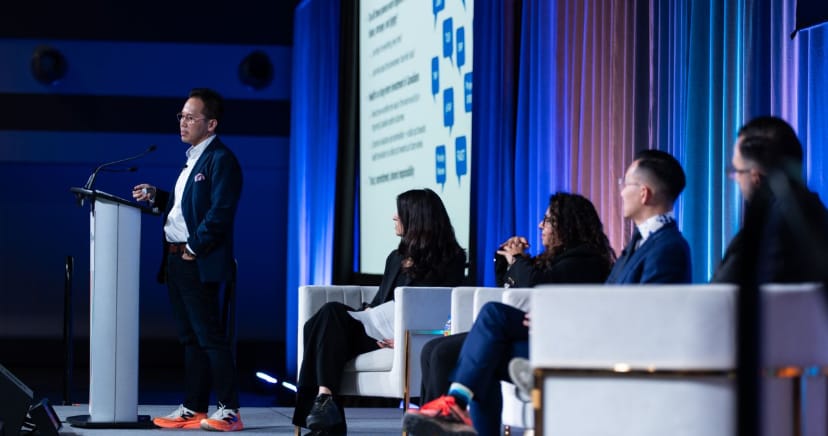
That sentence came from Robby Spring, the patient partner on the genomic data and HTA panel. She was speaking from her own experience as a breast cancer patient, but she could have been describing my mother.
Robby laid out the disconnect with surgical clarity. Drugs are reviewed in one process. Diagnostics in another. Biomarker tests in yet another. You cannot meaningfully assess a targeted therapy without also assessing the test that identifies who it’s for, the lab that runs that test, and the data systems that connect the result to a treatment decision. These are not separate questions, she said. They are one system, but we review them in silos.
Then she said the line that broke me a little: because we don’t connect them, we end up where her family is. Where my family is. The science exists, but patients can’t actually benefit from it.
For pancreatic cancer, this is the whole story. Daraxonrasib (RMC-6236), the KRAS-targeted therapy now showing 13.2-month median survival in KRAS G12X-mutant pancreatic cancer, is exactly the kind of drug Heather would have been a candidate for. The science is moving. The system is not.
Canada’s Genomic Data Problem Is Bigger Than Any One Disease
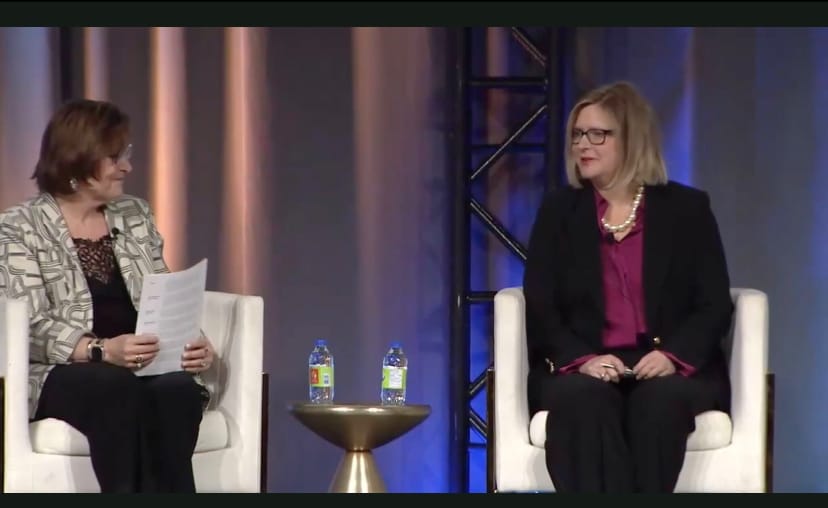
Dr. Laura Weeks, who leads health technology assessment at Canada’s Drug Agency, opened with a number that should stop every policymaker in this country. About one in five drugs now coming through reimbursement review requires some form of testing to identify who it’s for. Precision medicine is not a future thing. It is here.
But the testing side of that equation is, in her words, variable within jurisdictions and variable across jurisdictions. Different decisions, different timelines, different access — depending on where you live.
She walked through a sobering example: DPD deficiency testing. Patients who can’t metabolize certain chemotherapy drugs experience severe, sometimes fatal toxicities. We test for it — but we mostly test for the variants common in people of European ancestry. Patients from other backgrounds have died from chemotherapy that was supposed to save them, even after being tested, because we tested for the wrong thing.
Dr. Naveed Aziz from Genome Canada drove the point home. The reference data Canadian medicine relies on — the UK Biobank, US datasets — is roughly 90% white European. Therapies designed around those datasets do not always translate to the diversity of the Canadian population. And the data we do collect here? Much of it, he said, is not consented for the uses we now need it for. Some of it is literally sitting on individual researchers’ laptops.
Travel, Cost, and the Cancer Tax
The second panel I sat in on was about social determinants of health and financial toxicity — and I want to be honest about why this one hit hard for someone running a foundation in Newfoundland and Labrador.
Cathy Bernard, founder of Save Your Skin Foundation, told her family’s story. Her father was treated for esophageal cancer fifty years ago in Powell River, BC — a community reachable only by two ferries to get to Vancouver. Her family rotated who would do “cancer duty.” When she herself was diagnosed with stage IV melanoma in her forties, she ended up flying to Edmonton for a clinical trial, was told the drug alone would cost $40,000, and started drawing down her RRSPs to pay for it.
Save Your Skin has now distributed more than $600,000 to over a thousand patients to help them get to treatment. And Cathy’s blunt assessment was this: 40 to 50% of Canadians can’t afford what she was able to scrape together. They are selling homes. They are running up lines of credit. They are crowdfunding gas money. And some of them are making treatment decisions based on the cost of getting to the appointment.
Christina Sit from the Leukemia & Lymphoma Society of Canada presented survey data that quantified what we in Atlantic Canada have been saying for years. Over 50% of blood cancer patients travel more than 100 kilometres for treatment. Almost 40% travel three hours or more. Nearly half experienced more than a 10% reduction in household income. About half lived apart from their immediate family during treatment — most of them for more than six months.
If you live in St. John’s, Corner Brook, Goose Bay, Charlottetown, Sydney, or anywhere off the main corridor of central Canada, none of this is news. It is just the cost of getting sick here.
Louise Binder, also of Save Your Skin Foundation, called on Canada’s Drug Agency to do what the UK’s NICE has already started doing — implement a Distributional Cost-Effectiveness Analysis, run alongside traditional cost-effectiveness analysis, that actually measures who benefits from a treatment, not just whether it is cost-effective on average. When NICE applied this retroactively to two lung cancer drugs, they found that funding them helped close outcome gaps for populations who had historically done worse. Equity, quantified.
Why I’m Writing This Down
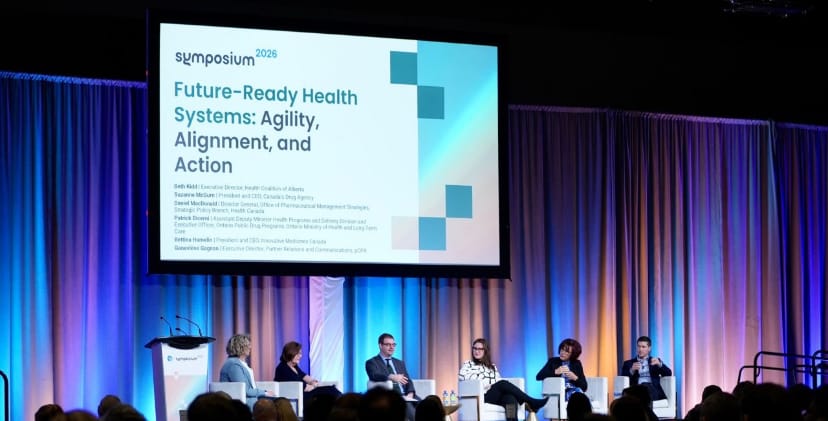
I am writing this for a specific reason. The conversations happening at CDA Symposium are technical, and they are often invisible to the families they are about. Most pancreatic cancer patients in Atlantic Canada will never know that the reason their genomic profile took months to interpret is because of the gap between research data and clinical data Dr. Aziz spoke about. Most will never know that the reason their targeted therapy isn’t covered involves the silos Robby Spring described. Most will never know that financial toxicity is being studied as a real, measurable equity barrier — not just an unfortunate side effect of being sick.
But these are the rooms where the rules get written. And patient voices belong in them.
A few things I took home from those two days:
Standardization is not a boring word. When Dr. Aziz answered the closing question about what Canada most needs to do, his three words were “standardized, top down.” If we cannot collect data the same way across provinces, we cannot use it to help patients. Full stop.
Genomic testing has to stop being treated as a research curiosity. Robby Spring’s closing line — stop treating it as a research curiosity, start treating it as standard part of care — is, for pancreatic cancer specifically, the difference between life and not.
Travel costs are not a footnote. They are an equity issue, and the data exists to prove it. CDA has the tools and the precedent to start factoring this into recommendations. They should.
Patients are co-designers, not consultees. Louise Binder put it well: patient organizations have data, and we are willing to be partners in building an equity framework. The invitation is on the table. The CDA’s response will tell us a lot about the next decade of cancer care in this country.
What You Can Do
If you’ve read this far, you care. Here’s how to keep that going.
Read the full proceedings when CDA publishes them. Share this article with someone who works in policy, in oncology, or in your provincial health system. If you have a story about access — to testing, to therapy, to a clinical trial, to a treatment centre that was four ferries away — tell it. Patient stories are the data that moves systems.
And if you want to support this work in Atlantic Canada specifically, The Heather Cutler Foundation is a registered Canadian charity built to advocate for pancreatic cancer patients in this region. You can learn more, sign up for updates, or donate through CanadaHelps.
Mom didn’t get the system she deserved. We are working — alongside the people I sat with at CDA Symposium 2026 — to make sure the next family does.


