



August brought the first U.S. approval of a drug that broadly targets the RAS family of cancer-driving proteins in pancreatic cancer. We also saw early results from new treatment combinations, updated radiation guidance, progress in early detection, and two important opportunities for Canadians: free biomarker testing through My CANcer Code and a national patient-and-caregiver survey.
August brought the kind of pancreatic cancer news families have waited a long time to hear. Daraxonrasib — a once-daily pill that targets the engine behind most pancreatic cancers — was approved in the United States after nearly doubling median survival in a large clinical trial. Another targeted drug moved onto a faster regulatory path, while smaller studies gave us early signs that new combinations may help chemotherapy and immunotherapy work better.
But we need to be careful with the word “breakthrough.” One approved drug does not work for everyone, and U.S. approval does not automatically mean Canadian access. Results from 11 or 16 people can point researchers in the right direction, but they cannot prove that a treatment works. A result in mice is still a long way from a treatment people can receive.
We share the progress because it matters. We share the limits because they matter too.
The Month in Numbers
• 13.2 months — median survival with daraxonrasib, compared with 6.7 months for people receiving chemotherapy in the Phase 3 RASolute 302 trial.
• 64% — the percentage of people whose tumours shrank in a small trial combining motixafortide, immunotherapy and chemotherapy.
• 22 months — median survival reported in a 16-person trial that added clinical-grade L-glutamine to chemotherapy.
• 18% — the three-year risk of cancer or an advanced precancerous change among people whose pancreatic cysts had three or more concerning features.
• 6,000+ — the number of people expected to take part in a U.K. trial of a pancreatic cancer breath test.
• 500 — the number of Canadian patients and caregivers Craig’s Cause hopes will take part in its national care-experience survey.
• $22.8 million — new pancreatic cancer research funding announced by the Lustgarten Foundation for 18 projects.
Free Biomarker Testing for Canadians
This is something every Canadian living with pancreatic cancer should know about.
Pancreatic Cancer North America continues to offer My CANcer Code, a national pilot program providing eligible people with pancreatic cancer across Canada access to comprehensive biomarker and genomic testing free of charge.
The testing is delivered in partnership with OncoHelix, a Canadian genomic-diagnostics organization based in Calgary. It examines a sample of the cancer for genetic and other biological features that may help the oncology team consider targeted treatments, clinical trials or other care options.
What Is Biomarker Testing?
Think of biomarker testing as looking for clues inside the cancer. Pancreatic cancers may look similar on a scan, but they do not all have the same genetic changes. Finding one of those changes may help explain what is driving the cancer and whether a treatment designed for that specific change could be considered.
Testing can look for changes involving genes such as KRAS, BRCA1, BRCA2 and PALB2, along with other biomarkers that may affect treatment decisions, clinical-trial eligibility or the need for hereditary cancer assessment.
Why My CANcer Code Matters
Access to comprehensive testing is not equal across Canada. What is publicly covered — and how many biomarkers are tested — can depend on the province, treatment centre and individual circumstances. My CANcer Code was created to help remove financial and geographic barriers.
Finding a biomarker does not guarantee that a matching treatment will work or that a clinical trial will be available nearby. Some results may not change treatment today. But without testing, patients and oncology teams may never know that a targeted option or relevant trial exists.
Learn more about eligibility and access through the My CANcer Code program.
Another KRAS Drug Moves Forward
Daraxonrasib was not the only targeted-treatment news this month.
On August 3, the FDA granted Breakthrough Therapy designation to olomorasib for adults with previously treated, advanced pancreatic cancer whose tumours have a specific change called KRAS G12C.
This designation allows the FDA to work more closely with a drug developer and may speed development and review when early evidence suggests a meaningful improvement over available treatment. It is not the same as approval. Olomorasib still needs more study before its safety and effectiveness can be confirmed.
The KRAS G12C change occurs in only a small portion of pancreatic cancers. That is another reason tumour biomarker testing matters: it can sometimes identify a gene change connected to a targeted treatment or clinical trial.
Immunotherapy Combination Shows Promise
Immunotherapy has transformed treatment for several cancers, but it has mostly struggled against pancreatic cancer. One reason is that pancreatic tumours build a dense, protective environment that keeps cancer-fighting immune cells out or switches them off.
A small Phase 2 study published in August tested a four-drug combination in 11 people with newly diagnosed metastatic pancreatic cancer. The treatment combined two chemotherapy drugs with cemiplimab, an immunotherapy drug, and motixafortide, a drug intended to help immune cells enter the tumour.
Seven of the 11 people had measurable tumour shrinkage, giving the study a 64% response rate. Ten had their cancer shrink or remain stable for a period of time.
One person responded well enough to have surgery. Doctors found no living cancer cells in the removed tissue, and that person remained cancer-free for more than two years without additional treatment.
That individual result is remarkable. But it is still one person.
What this means — and what it doesn’t: Eleven participants are not enough to prove that the combination is better than standard treatment. The study also did not randomly assign people to different treatments, which makes fair comparison harder. A larger multicentre study is now evaluating the combination.
L-Glutamine With Chemotherapy
A second small study looked at whether clinical-grade L-glutamine could help standard chemotherapy work better.
The GlutaPanc trial included 16 people with advanced pancreatic ductal adenocarcinoma who had not yet received treatment for advanced disease. They received clinical-grade oral L-glutamine with gemcitabine and nab-paclitaxel chemotherapy.
The study reported tumour shrinkage in 94% of participants, although 44% met the formal definition of a treatment response. Median time before the cancer worsened was 8.5 months, and median survival was 22 months.
Those numbers are encouraging, but this was a Phase 1 study. Its main purpose was to examine safety and establish how the treatment could be given. Everyone received the same combination, and there was no control group receiving chemotherapy alone at the same time.
A note for patients and caregivers: This study does not show that store-bought glutamine supplements treat pancreatic cancer. The trial used clinical-grade L-glutamine in a controlled treatment plan. Supplements can interact with treatment or be inappropriate for some people. Speak with the oncology team before taking any supplement during cancer treatment.
Radiation Guidance Is Updated
The American Society for Radiation Oncology published updated guidance for treating pancreatic cancer with radiation in August. It was the organization’s first major update to its pancreatic cancer guideline since 2019.
The guidance covers cancer that may be removable with surgery, locally advanced cancer, cancer that has returned and cancer that has spread. It reflects improvements in imaging and in the ability to target radiation more precisely while accounting for movement caused by breathing and digestion.
The guideline supports considering radiation before surgery for some people with borderline-resectable cancer. “Borderline resectable” means surgery may be possible, but the tumour touches important nearby blood vessels and may be difficult to remove completely. Radiation may also be considered after chemotherapy for some people with locally advanced disease, or to relieve symptoms such as pain, bleeding or blockage.
This does not mean everyone with pancreatic cancer should receive radiation. The decision depends on where the tumour is, whether it has spread, what other treatments have been given and the person’s overall health.
Earlier Detection
Better Information About Pancreatic Cysts
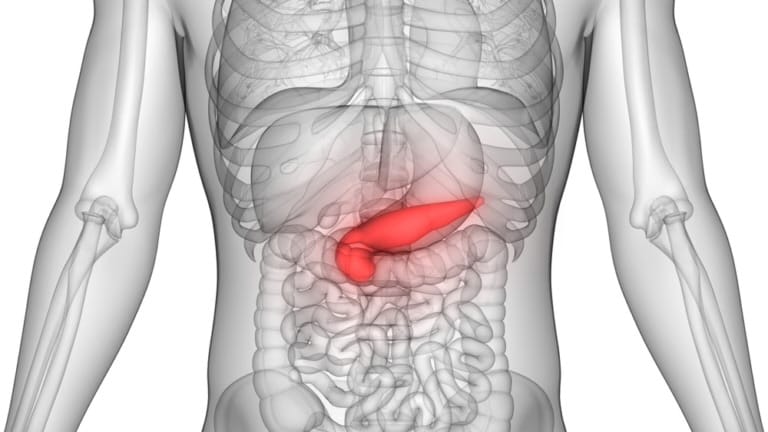
Pancreatic cysts are fluid-filled growths found in or on the pancreas. Many never become cancer, but some can develop into pancreatic cancer over time. The hard part is knowing which cysts need surgery and which can be safely watched.
A Mayo Clinic study followed 230 people whose pancreatic cysts had at least one concerning feature. Within three years, the risk of pancreatic cancer or an advanced precancerous change was about 2% for people with one concerning feature, 4% for those with two and 18% for those with three or more.
This gives patients and care teams more useful numbers for difficult decisions. Pancreatic surgery is a major operation, so removing every cyst would cause unnecessary harm. But missing a high-risk cyst could mean losing the chance to prevent or find cancer early.
In this study, cancers found through careful monitoring were detected at very early stages. The researchers also found that an elevated CA 19-9 blood-test result by itself did not reliably show which cysts would become dangerous.
What this means: A cyst should not be judged by one test result alone. Its size, appearance, growth, symptoms and other features all matter. Anyone with a pancreatic cyst should discuss an appropriate surveillance plan with a specialist.
AI May Help Choose Chemotherapy

After pancreatic cancer surgery, many people receive chemotherapy to reduce the chance of the cancer returning. Two common approaches are modified FOLFIRINOX — a combination of several drugs — and gemcitabine-based treatment.
Modified FOLFIRINOX can be more effective for many people, but it is also more intensive.
Researchers developed an artificial-intelligence tool called PANCprAId. It examines a digital image of tumour tissue removed during surgery and looks for patterns that may help predict which chemotherapy is more likely to benefit a person.
The tool was developed using tissue from 231 people and then tested using 313 people from a previous randomized clinical trial. It identified a large group that appeared to benefit more from modified FOLFIRINOX and a smaller group that may have done better with gemcitabine.
This is not yet a test used routinely in hospitals. The smaller gemcitabine-favouring group represented only 15% of the validation group, and that result did not meet the usual threshold for statistical certainty.
If confirmed, a tool like this could use tissue already collected during surgery to help people avoid a more difficult treatment when another option may suit their cancer better.
A Breath-Test Trial Expands
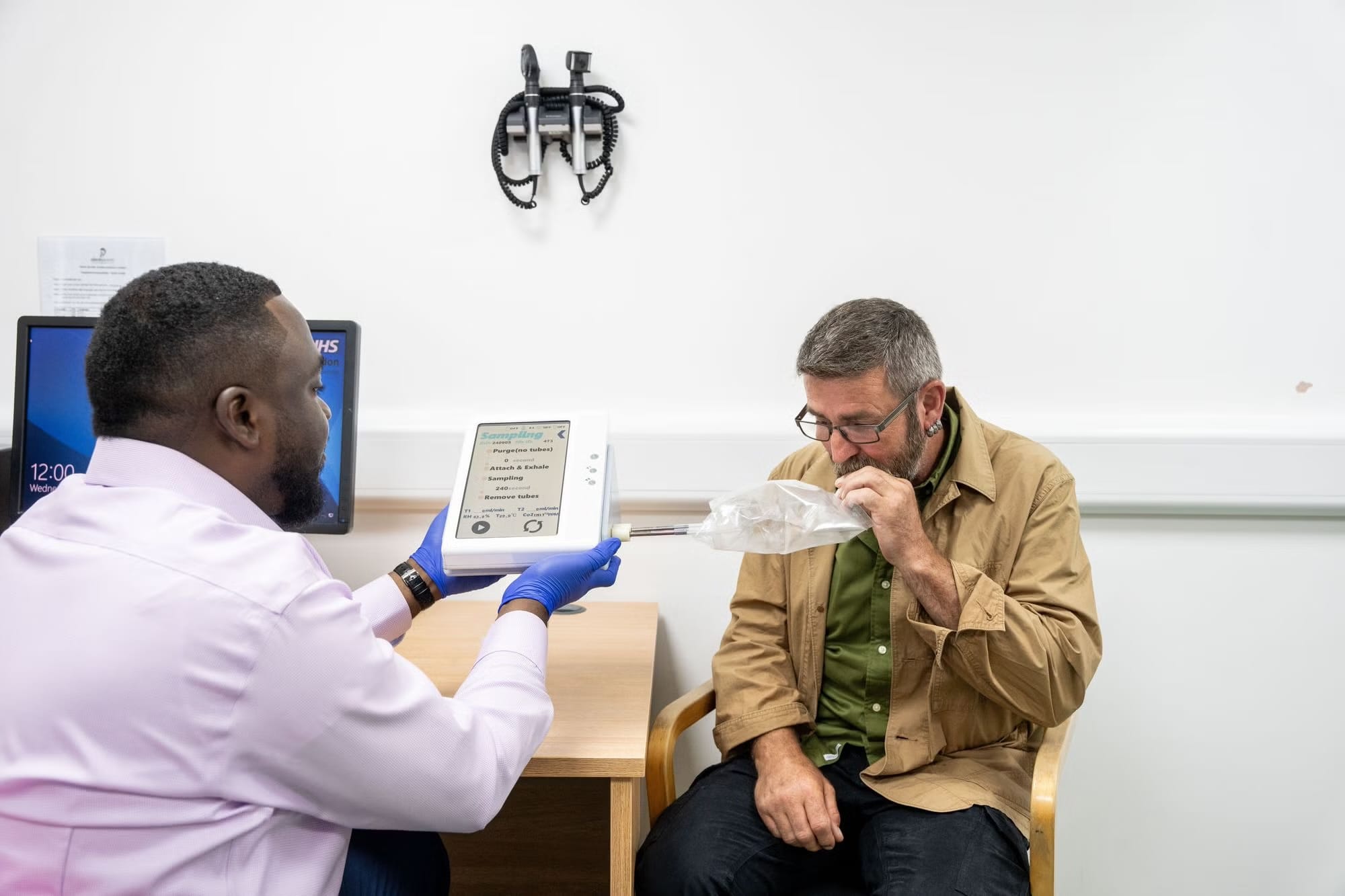
A large U.K. trial of a pancreatic cancer breath test opened its first site outside England in August, at Wrexham Maelor Hospital in Wales. The full study plans to recruit more than 6,000 people at 46 locations.
The test measures patterns of chemicals called volatile organic compounds. These chemicals circulate in the blood and leave the body when a person breathes out. Collecting a sample takes about 30 seconds.
Researchers hope the test could eventually help family doctors decide which people with vague symptoms need urgent scans and specialist assessment.
Earlier research involving more than 700 breath samples produced promising results, including signs that the test could find early disease. The larger trial is needed to determine whether it works accurately in everyday healthcare.
The breath test is not currently available as routine pancreatic cancer screening in Canada or the United Kingdom.
From the Laboratory
Probiotic Bacteria Deliver Treatment
Researchers at the University of Chicago engineered a type of probiotic bacterium to carry an immune-stimulating treatment into pancreatic tumours. The bacteria naturally prefer low-oxygen environments like the inside of many tumours.
In mice, the engineered bacteria entered pancreatic tumours, activated cancer-fighting immune cells and slowed tumour growth. The approach worked better when combined with chemotherapy, radiation or immunotherapy.
The goal is to produce a powerful immune signal inside the tumour while limiting exposure to the rest of the body. This has not been tested in people. It is not evidence that ordinary probiotics can treat pancreatic cancer, and patients should not change their diet or supplements because of this study.
Better Models Find Weak Spots
Scientists often study cancer using cells grown flat in laboratory dishes. But those cells do not behave exactly like tumours inside the body.
In August, researchers reported a collection of 256 organoids covering pancreatic and four other difficult-to-treat cancers. Organoids are tiny three-dimensional models grown from patient tumour tissue. Researchers used gene-editing tools to turn off genes one at a time and see which ones the cancer needed to survive.
Another project added almost 150 three-dimensional cancer models to the Cancer Dependency Map, a research resource used to find cancer’s weak points. Scientists found important features in pancreatic and other digestive-system tumour models that disappeared when the same cells were grown in traditional flat dishes.
This will not change treatment today. More realistic tumour models can, however, help researchers choose better drug targets — and reject weak ideas — before testing treatments in people.
Studying Treatment Resistance
Several August studies looked at why pancreatic cancer survives treatment and where new treatments might attack it:
• Researchers identified HMGB2, a protein that helps control gene activity, as a possible weakness in pancreatic cancer. Blocking its activity slowed tumour growth in laboratory and animal models.
• Peter Mac researchers identified four proteins — CDK9, CDK11, CDK12 and CDK13 — that pancreatic cancer cells may rely on to keep essential genes working.
• A team developed a molecule called TR-07 that activates an enzyme known as PRMT1. In preclinical models, it made pancreatic cancer cells easier to kill and helped chemotherapy work better.
• Another study linked changes in the OGT-BICD2 pathway to resistance against gemcitabine chemotherapy, suggesting a possible target for future drugs.
• Researchers tested a specialized MRI method that measures the physical properties of a tumour. Measurements around the tumour’s edge were associated with more aggressive disease and with the length of time people remained cancer-free after surgery.
These findings are early. None is an available treatment or standard test. Their value is in showing researchers where to look next.
Building Stronger CAR-T Cells
CAR-T therapy involves removing a person’s immune cells, changing them in a laboratory so they can recognize cancer, and returning them to the body. It has been successful against some blood cancers but has had difficulty reaching and surviving inside solid tumours such as pancreatic cancer.
Researchers used a large gene-editing screen to find two genetic “brakes,” called GNAS and P2RY8, that can limit the ability of engineered T cells to enter and attack solid tumours. Removing these brakes helped the cells work better in mouse models, including models of pancreatic cancer.
This is a step toward improving CAR-T therapy for solid tumours, not proof that it now works for people with pancreatic cancer. More safety studies are needed before these edited cells can be tested in human trials.
More Canadian Updates
Craig’s Cause Continues Its National Study
Craig’s Cause Pancreatic Cancer Society continues to recruit people with pancreatic cancer and caregivers for Canada’s first national, ethics-approved study of pancreatic cancer care experiences.
Led by Dr. Ravi Ramjeesingh of Dalhousie University, the study aims to hear from 500 people. It asks about diagnosis, treatment, support and access to care, with the goal of identifying gaps across Canada.
A national survey cannot replace clinical research. But it can document what patients and caregivers are actually experiencing — including delays, differences between provinces, travel barriers and missing supports — so advocates and policymakers have evidence they can act on.
What you can do: Canadian patients and caregivers can take the Pancreatic Cancer Patient & Caregiver Experience Survey.
Alpha DaRT Finishes Recruitment
The IMPACT pilot study completed recruitment of 48 people at 10 centres in Canada, the United States and Israel at the end of August. The trial is studying a treatment called Alpha DaRT for newly diagnosed pancreatic cancer that cannot be removed by surgery.
Alpha DaRT uses small devices placed directly into a tumour to deliver alpha radiation over a short distance. In this study, it is given once and added to standard first-line chemotherapy.
The trial originally planned to recruit 12 people and expanded several times because of patient and clinician interest. Completing recruitment means researchers can now follow participants and analyze the results. It does not tell us yet whether the treatment is safe or effective.
New Research Funding
The Lustgarten Foundation committed $22.8 million to 18 pancreatic cancer research projects in August. The work includes KRAS-targeted treatments, immunotherapy for cancers with BRCA1, BRCA2 or PALB2 changes, treatment guided by biomarkers and an attempt to target abnormal KRAS in precancerous pancreatic cysts.
Funding is not a clinical result. But it determines which ideas can move from the laboratory into trials. This group of projects covers the full path: preventing cancer, finding it sooner, matching treatment to tumour biology and treating advanced disease.
Looking Ahead
• Canadian access to daraxonrasib: We will watch for a formal Health Canada decision and, if it is approved, the reimbursement decisions that determine whether provincial cancer programs will cover it.
• Larger treatment trials: The motixafortide and L-glutamine combinations need randomized studies with many more people before their benefits can be separated from chance or patient-selection differences.
• Results from Alpha DaRT: Recruitment is complete, but the study now needs enough follow-up to report safety and treatment outcomes.
• Early-detection evidence: The pancreatic cyst estimates, AI chemotherapy tool and breath test all need further validation and proof that using them improves patient outcomes.
• Resistance to RAS drugs: Now that daraxonrasib is approved, a central question is how long it keeps working and which combinations might delay or overcome resistance.
Final Thoughts
August was different.
For decades, researchers described RAS — the growth signal behind most pancreatic cancers — as “undruggable.” This month, a drug designed to block active RAS became an approved pancreatic cancer treatment in the United States. In a large trial, people receiving it lived nearly twice as long, on average, as those receiving chemotherapy.


